
Worn stem steel rollers
That matters for rollers specifically: a door from 1993 is now over thirty years old, and the stock steel rollers it shipped with have usually worn their stems down to nothing by now, even if the door itself still looks fine.
Andover, Plymouth
Andover's garage doors mostly date to the early 1990s, and factory steel rollers are hitting the end of their run. We drive out from Plymouth to swap them before a track jumps.
Watch-outs
Andover runs about 11,087 households, a smaller and tighter pocket than the core of our service area, and that size shapes what we see. It's not a town where every third house has the same 1960s door - most of Andover was built up later, and the garage doors out here skew newer than the 1982 median you'd find across the wider territory.
That matters for rollers specifically: a door from 1993 is now over thirty years old, and the stock steel rollers it shipped with have usually worn their stems down to nothing by now, even if the door itself still looks fine.
Where this goes sideways is when a homeowner hears a grinding sound, assumes it's the opener, and keeps running the door anyway. A worn roller doesn't fail clean - it drags, chews at the track edge, and eventually lets the door tip in the frame.
By the time a cable jumps off a drum because the door is riding crooked, you're no longer looking at a $20 roller problem. We come out from Plymouth, about 17 miles, so we try to catch this on the first call rather than the second.
The repair
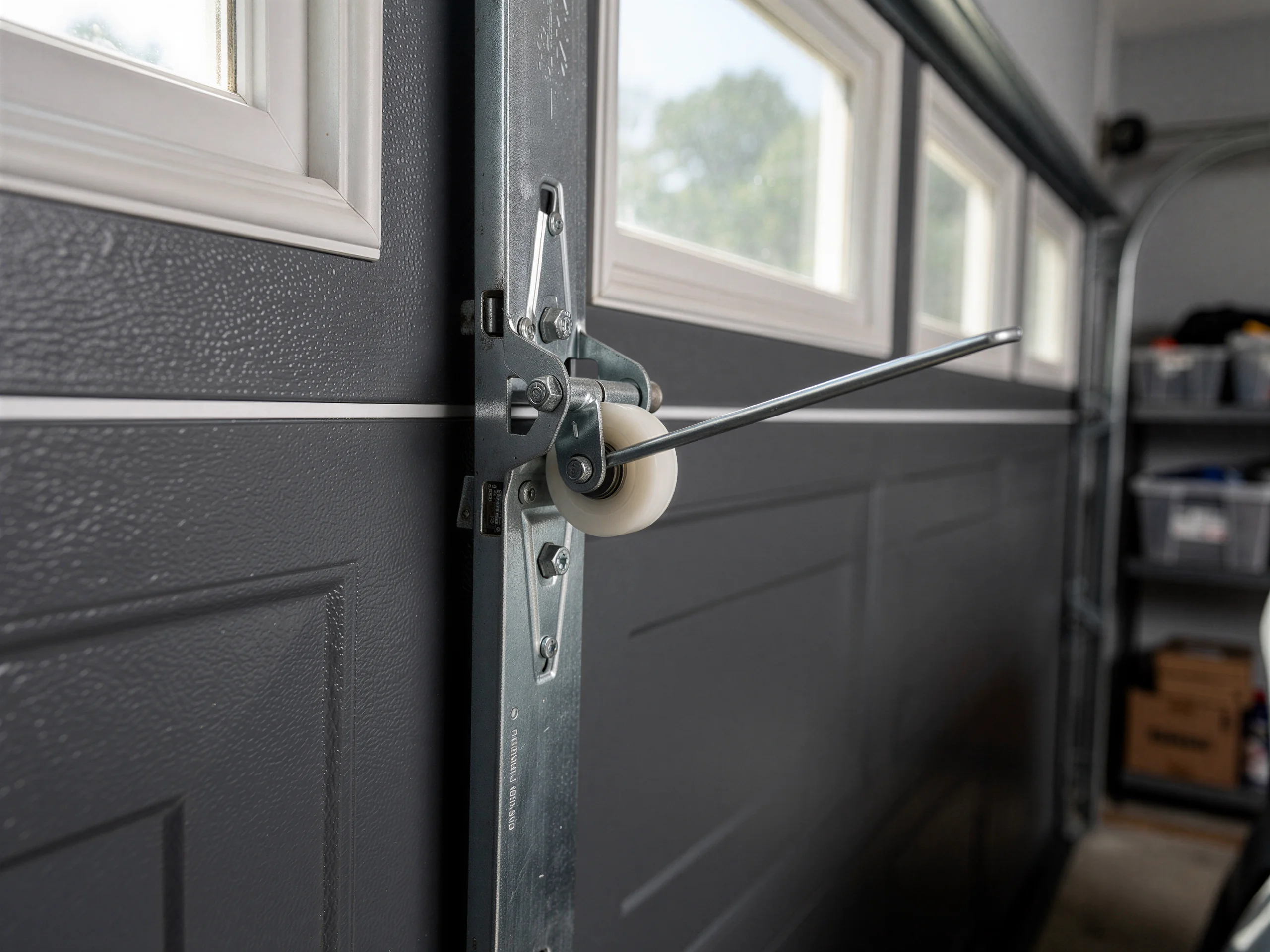
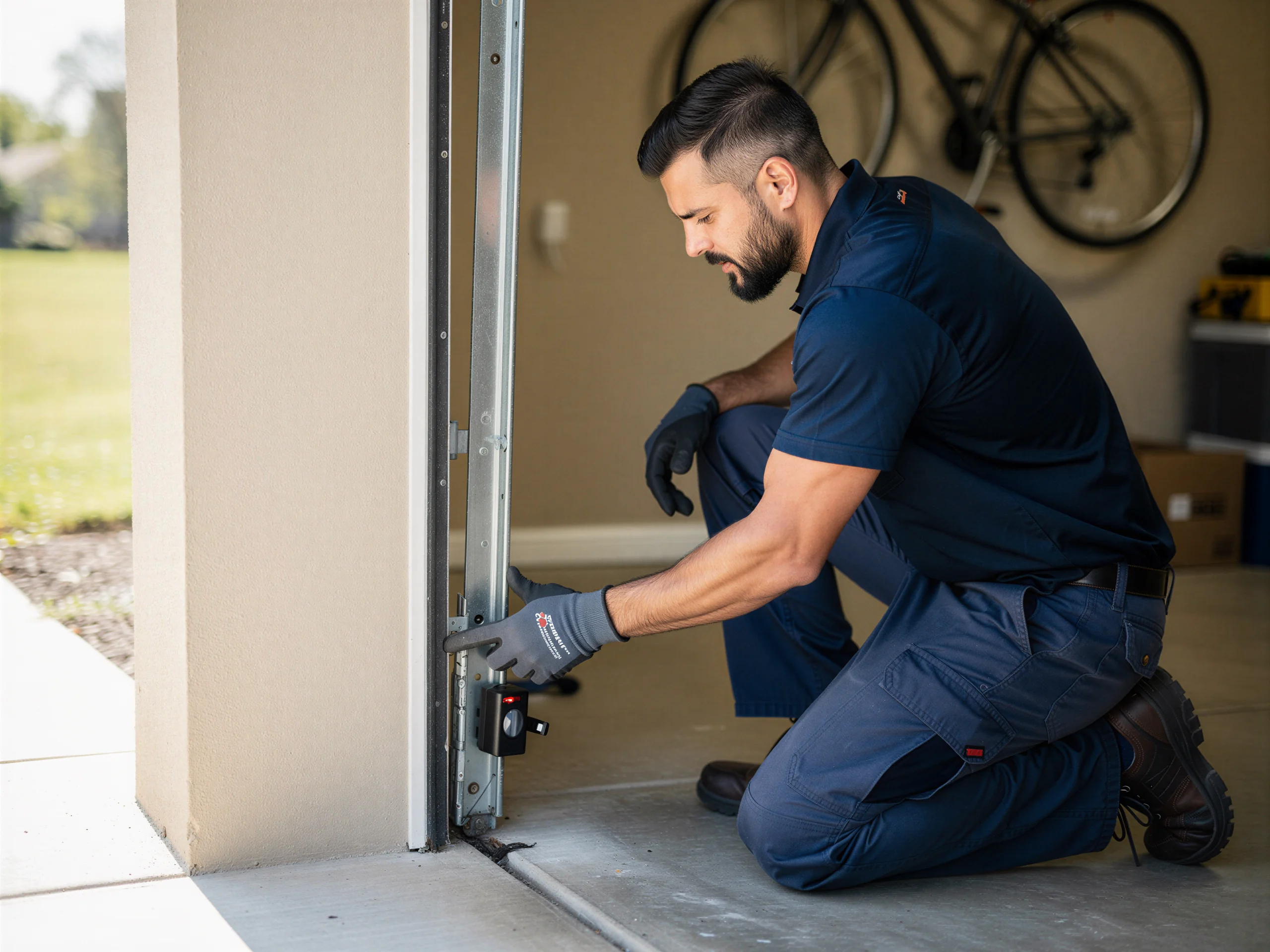
Roller replacement is straightforward in concept and finicky in practice. We pull the old rollers one at a time, starting away from the spring side, check the stem length and wheel diameter against the track, and set a new roller in before moving to the next.
On a door this age we're almost always swapping steel-stem rollers for nylon rollers with sealed ball bearings - quieter, and they don't need the periodic oiling the old steel ones did. The part most people skip is checking the track itself while the rollers are out.
A roller that's been dragging for months usually leaves a groove or a burr on the track rail, and setting a new roller into a damaged track just wears the new one out fast too.
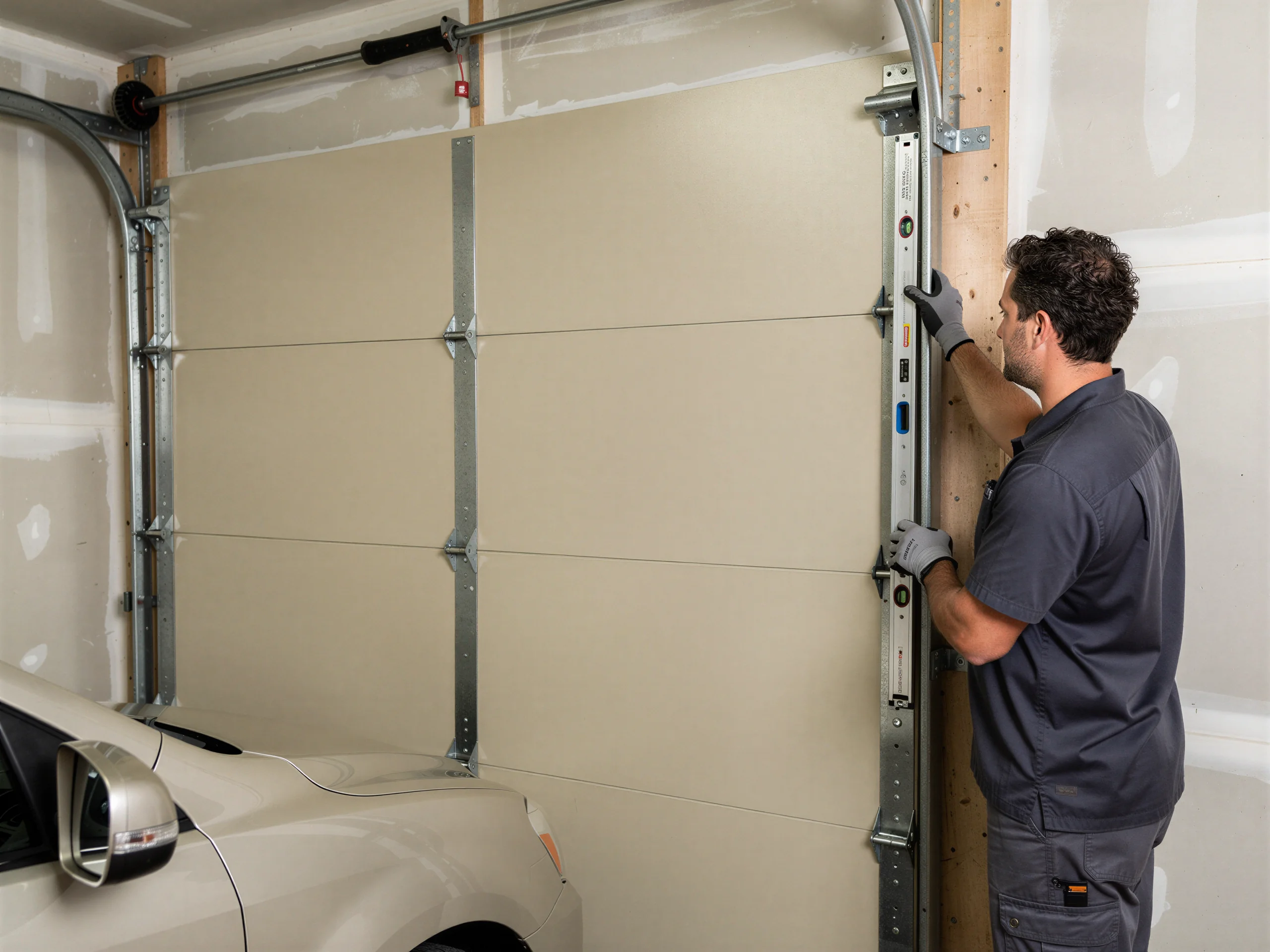
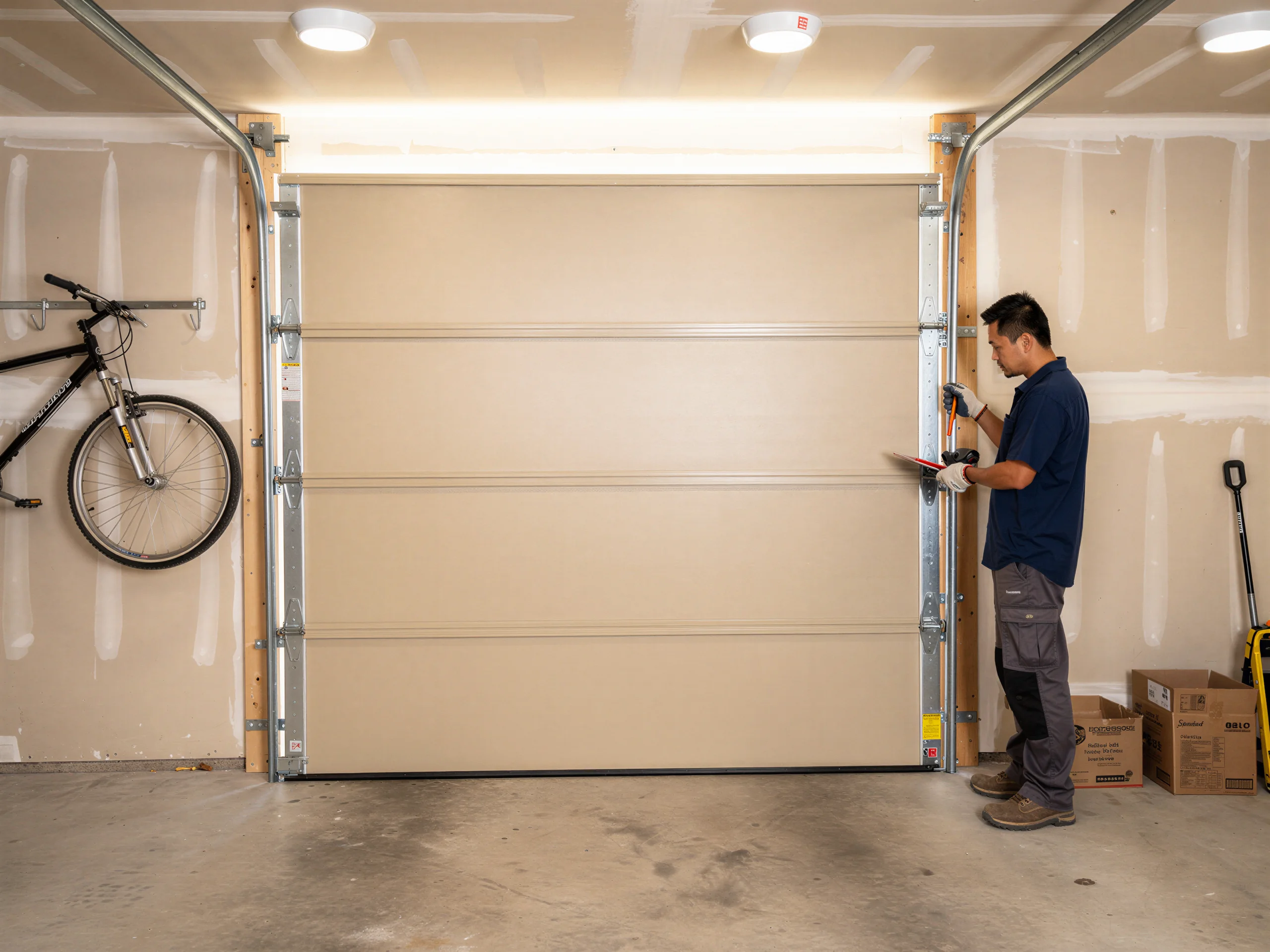
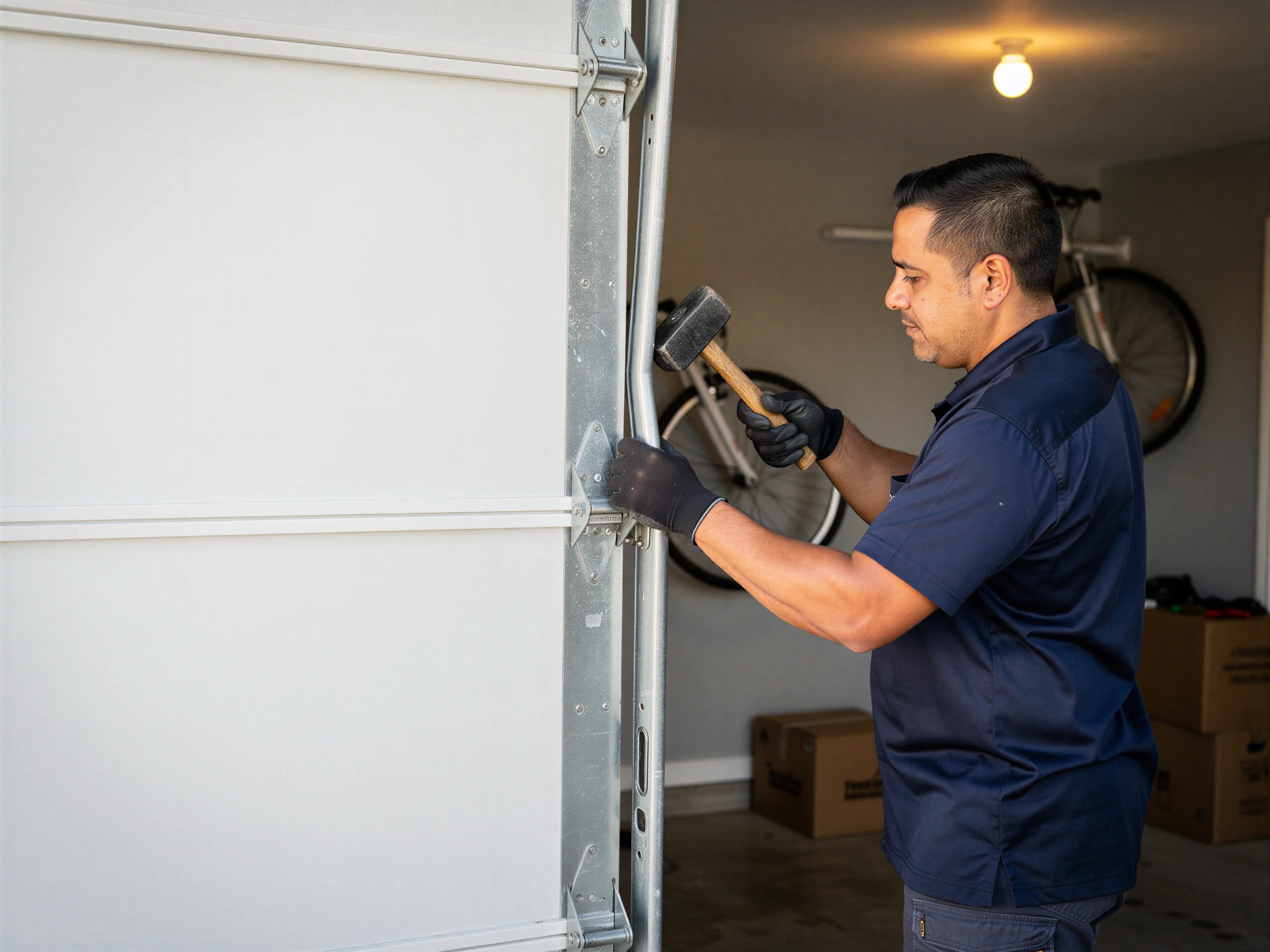
So part of the job is inspecting the rail, cleaning out old grease and grit, and confirming the track is still plumb before we close the door back up. If the track is bent rather than just worn, that's a separate repair, and we'll say so rather than bolt new rollers into a bad rail.
DIY or pro
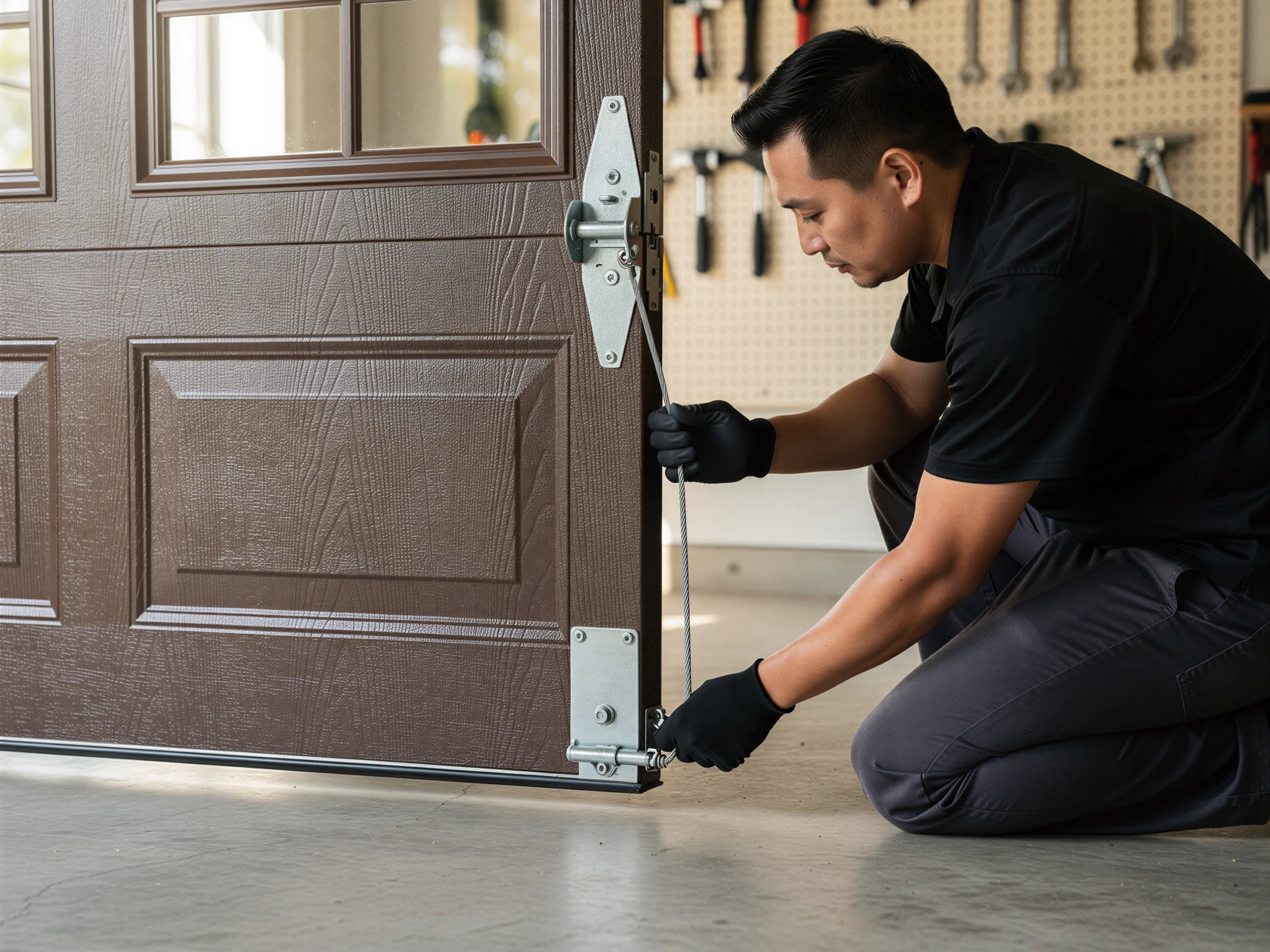
The bottom rollers on a garage door - the ones with no cable or spring near them - are a reasonable DIY swap if you've got the right nylon roller and a pair of pliers to pull the retaining clip.
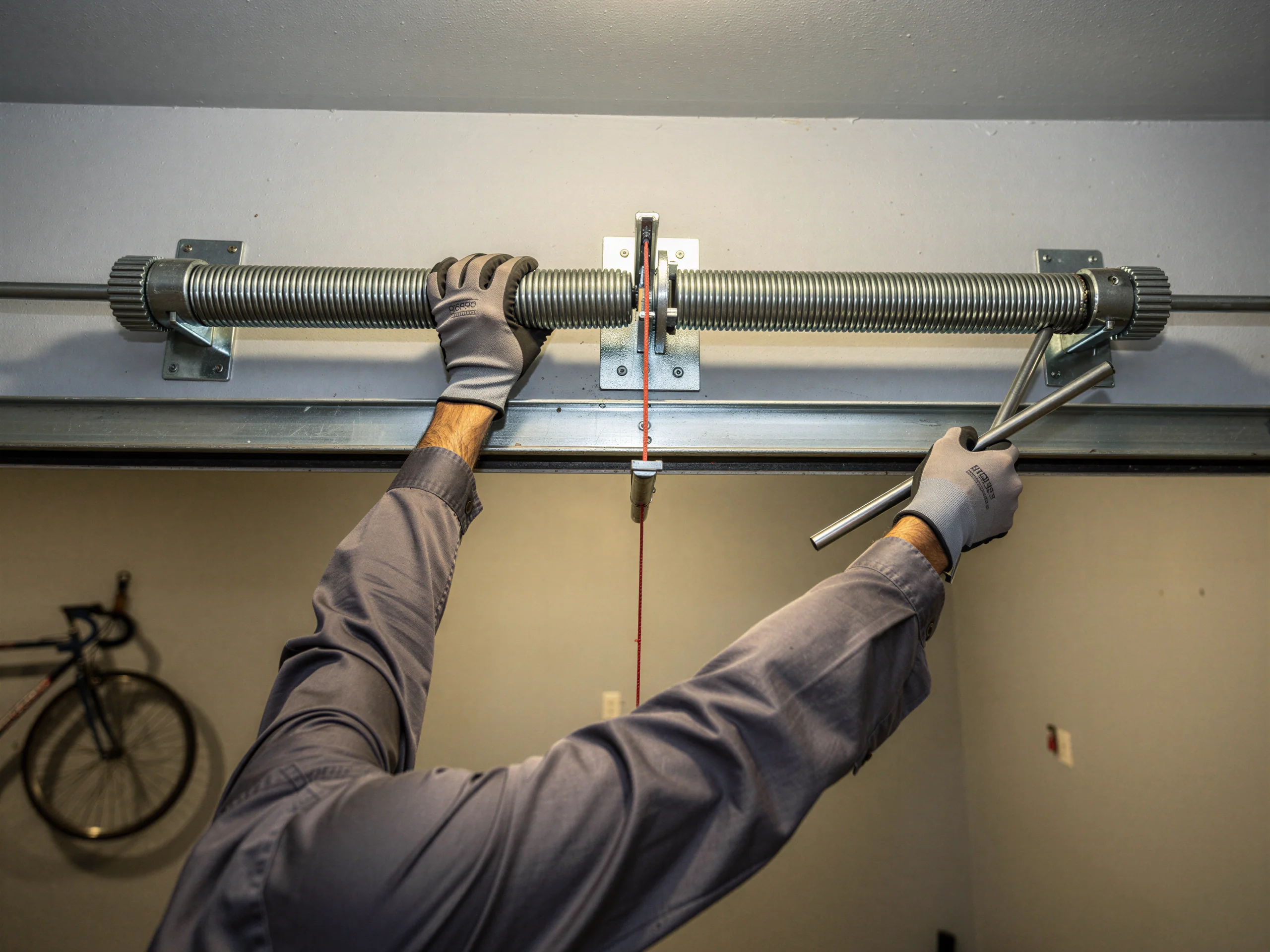
Where it stops being a weekend job is the top rollers nearest the torsion spring, because the door has to be supported and the cable has to stay seated while you work. A slipped cable under tension is how people get hurt doing this job, not the roller itself.
Our honest limitation here: we don't do small parts-only drop-offs. If you call us for a roller job, we come out, look at the whole door, and fix what's actually worn - we're not going to sell you four rollers over the phone and let you find out the hard way that the track needed attention too.
If you're comfortable with the bottom two and want us for the top two near the spring, that's a reasonable split, and we'll tell you honestly if the whole set should go at once instead.
Local causes
Minnesota sits in a severe cold climate band, and that matters more for rollers than people expect. Grease inside an old roller stem stiffens hard once temperatures drop well below freezing, and a roller that won't spin freely doesn't just squeak - it drags along the track on a frozen bearing until the stem shears off, usually on the coldest morning of the year when you're already late.
Combine that with Andover's housing stock: a lot of doors here went up in the early-to-mid 1990s, which puts the original hardware right at thirty-plus years of freeze-thaw cycles. Steel rollers from that era weren't sealed, so decades of winter grit and road salt tracked in on tires have worked into the bearings. Nylon rollers with sealed bearings handle that cycle better, which is part of why we steer most Andover replacements that direction instead of swapping steel for steel.
Questions
Most residential doors have ten rollers, and we typically replace them as a full set rather than one or two. Mixing decades-old steel rollers with new nylon ones puts uneven wear back into the track almost immediately, so doing the whole run at once saves you a second call.
For a door built in the early 1990s, yes. Sealed nylon rollers don't need periodic oiling and hold up better through Minnesota's freeze-thaw cycles than the original unsealed steel rollers. The cost difference is modest compared to the labor, so most Andover owners upgrade rather than replace like-for-like.
Standard nylon rollers are stock items we carry. If your track or drum turns out to be damaged along with the rollers, that part may need to be sourced separately, and we'll tell you at the inspection rather than guess over the phone.
Explore more
Ready when you are
Plymouth Garage Door Pros repairs and installs garage doors, springs and openers in Plymouth, MN and the surrounding area.