
Blog
Wind and the Wide Door: A Plymouth Problem
Plymouth homes built 1957-2007 often carry 16-foot double doors never braced for open, cold-climate wind. Here's what that means for your track and panels.
How Local Conditions Play In
Plymouth's housing stock runs from 1957 through 2007, with the median build year sitting around 1982. A lot of those houses, especially the ones from the 80s and 90s, were built with two-car garages and a single 16-foot door rather than two 8-footers. That wide door is the one that catches wind the way a sail does - more surface area, more flex down the middle, more load pulling on the track ends.
The climate here is classed as cold and severe, which matters for two reasons. First, cold makes steel and the hardware fasteners more brittle, so a door that's already stressed by wind doesn't bend back to true the way it would in a mild climate - it stays bowed or it cracks. Second, winter wind in this area tends to come in sustained gusts rather than one-off storms, so a wide door isn't getting hit once and recovering. It's getting worked, day after day, through the months when the garage is shut tightest.
If your house falls in that 1957-2007 build window - and most in Plymouth do - this isn't a hypothetical. It's a function of when the house went up and what size door came standard.
The Situation
A 16-foot door has roughly twice the surface area of an 8-footer, and under wind load that area doesn't distribute evenly. The center of the door flexes more than the edges, which puts uneven pull on the track rollers and on the torsion spring mounted above the opening. On doors built or installed before reinforced wind-rated struts were standard - common for houses from the 1980s and 90s median era in Plymouth - there's often no horizontal strut doing that job at all.
What you see first is usually cosmetic: a slight bow in the middle panel when the wind is up, a rattle in the track brackets. What you don't see yet is the track pulling away from the jamb a few millimeters at a time, or the end bearing plate working loose. In a cold-severe climate, metal fatigue from repeated flex happens faster because the steel is already stiffer and less forgiving.
This isn't every door in Plymouth. A newer door, or one already fitted with a center strut and heavier-gauge track, handles this fine. The age and width of the door are what decide whether wind is a real problem or just noise.
Doing Nothing For Now
If the door is doing nothing more than rattling, leaving it alone for a season usually doesn't cost you anything. But once the track starts pulling from the wall, or a panel takes a visible set that doesn't flatten back out when the wind drops, waiting starts to cost more than fixing would have.
A pulled track bracket on a wide door puts the whole opener assembly at an angle it wasn't built for - that's how you get a door that jumps the track in a gust, not gradually, but all at once. In a cold-severe climate, that kind of failure tends to happen in January, not August, because the steel is less flexible and the wind is worse.
We won't tell you every rattle needs a truck out. If the door is original to a 1980s or 90s Plymouth build and it's never had a strut added, that's worth a look before next winter, not after a call where the door's already off the track. If it's a newer door with reinforced hardware, a loose bracket is probably just a loose bracket.
What You Pay
We don't have a price list to hand you here, and we're not going to make one up. What a wind-related fix costs depends on whether this is a strut retrofit on an otherwise sound door, a track realignment, or a full panel replacement because something already bent - and those are three different jobs with three different price points.
What we can tell you honestly: a door that's original to a 1957-2007 Plymouth build and has never been reinforced is usually cheaper to brace now than to replace later once a gust takes it off the track. That's not a sales pitch, it's the order repairs usually come in once a wide door starts flexing in a cold-severe climate.
The honest limitation here is that we can't quote a number without seeing the door, the track, and how the opener's mounted. A phone estimate on a wind problem is a guess, and we'd rather tell you that than make one up.
Questions
Common questions
Is my garage door too wide to handle Plymouth winters?
Width alone isn't the issue - it's width without reinforcement. A 16-foot door from the 1980s-90s Plymouth building era often lacks a horizontal strut, which is what actually resists wind flex. Add one and the width stops being a liability. Skip it, and a cold-severe winter with sustained gusts will eventually show it in the track.
Why does my door bow in the middle when it's windy?
That's the center of a wide panel flexing because there's nothing bracing it against the push of the wind - common on doors built before reinforced struts were standard, which covers a lot of Plymouth's 1957-2007 housing stock. It's usually fixable with a strut retrofit rather than a full door swap.
Should I replace the whole door or just reinforce it?
Depends on the door's current condition. If the panels are sound and it's just missing a wind strut, reinforcing is the cheaper and faster fix. If a panel's already permanently bowed or the track's pulled from the frame, replacement is usually the better call. We'd need to look at it to tell you which situation you're in.
Recommendation
You Might Also Like
More garage door guides for Plymouth homeowners.
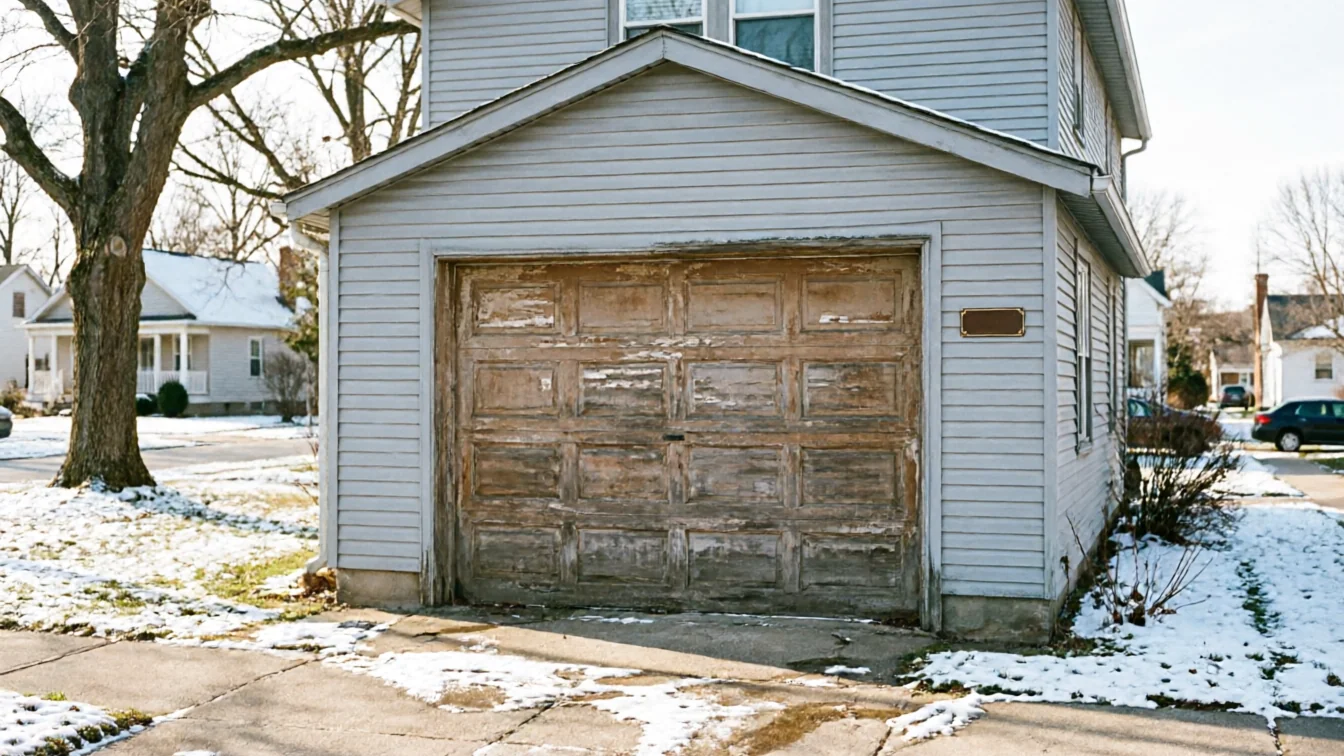
What That Garage Door Noise Is Actually Telling You
Plymouth homes built 1957-2007 carry hardware that ages in cold-climate cycles.
Read guide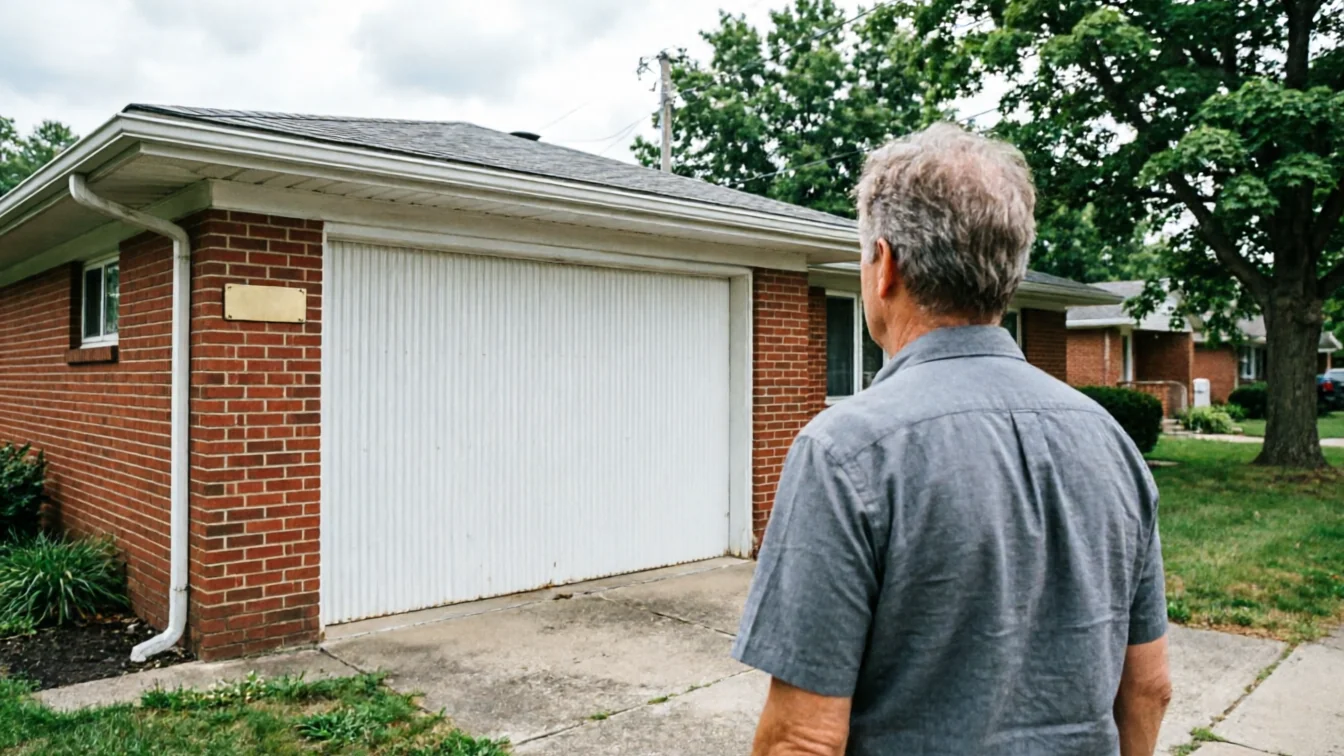
When Your Plymouth Garage Door Predates the Insulation Code
Plymouth homes built 1957-2007 often carry garage doors from before insulation codes tightened, which matters for cold-weather repair and replacement.
Read guide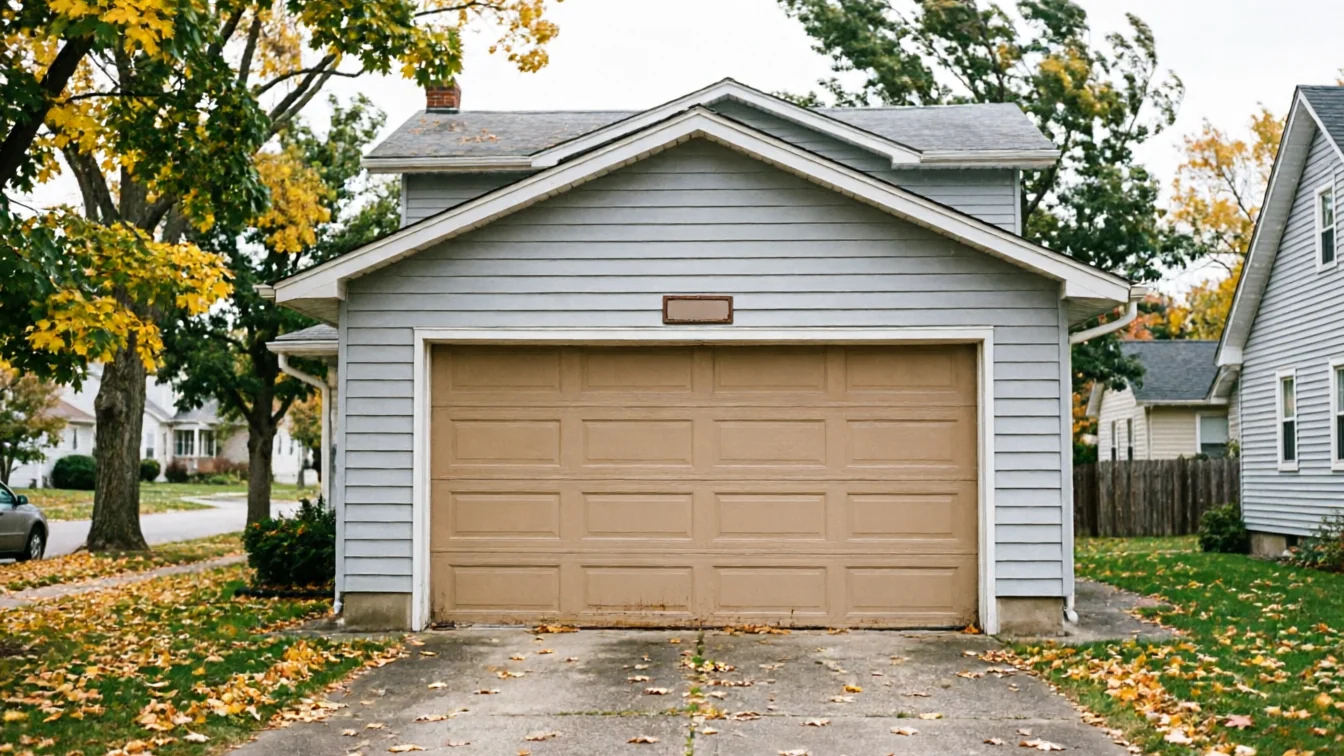
When the Opener Dies: Power Cuts and Plymouth Garage Doors
Plymouth homes built between 1957 and 2007 lose opener power differently depending on the circuit and the cold.
Read guideReady when you are
Need a garage door sorted in Plymouth?
Plymouth Garage Door Pros repairs and installs garage doors, springs and openers in Plymouth, MN and the surrounding area.