
Blog
Why Your Garage Door Setup Depends on Detached or Attached in Plymouth
Plymouth's housing dates mostly to 1957-2007, median 1982, and that build era decides whether your garage door problem is an attached-garage issue or a detached one.
How Local Conditions Play In
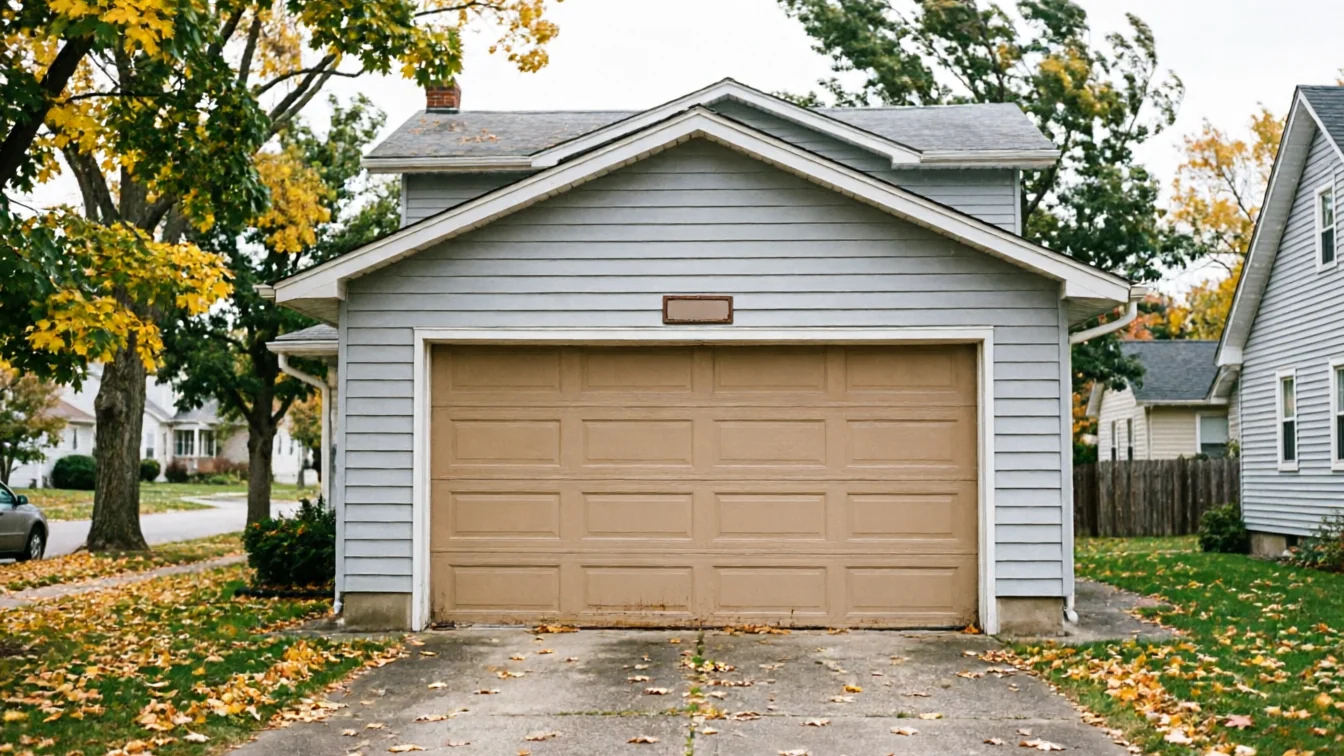
Plymouth's housing stock runs 1957 to 2007, with the median house dating to 1982. That number matters here because 1982 is right in the stretch when attached two-car garages became the default way to build a house in this part of Minnesota, replacing the standalone detached garage that older lots still carry. If your house dates closer to the 1960s end of that range, you may still have a detached garage out back with its own door and hardware, separate from the house.
Plymouth sits in a cold-severe climate band, and that changes what each garage type has to deal with. An attached garage shares at least one wall with heated living space, so the door is the main barrier between outside cold and a room people walk through to get to the kitchen. A detached garage has no such buffer. It swings with outside temperature all day, which is harder on springs, weatherstripping, and the metal in the door itself. Same climate, different stress depending on which side of the house the garage sits on.
The Situation
Across the 58 named areas that make up Plymouth's housing, the 1980s and 90s dominate the stock. That means most attached garages in town were built with steel sectional doors on torsion spring hardware, which is standard for that era and still the most common setup we see on a service call. A detached garage from the older end of the 1957-2007 range is more likely to carry an extension-spring setup or an older panel style, since those structures tend to sit untouched longer than the main house.
The practical difference shows up in how a failure behaves. On an attached garage, a broken spring or a door that won't seal means cold air pushing straight into a room connected to the house - sometimes a laundry room, sometimes a mudroom that backs onto the kitchen. On a detached garage, the same failure just means a garage that won't close, with no direct heat loss into living space. Same hardware problem, different consequence depending on where the structure sits relative to the house.
Doing Nothing For Now
Here's the honest part: not every garage door problem is urgent, and the type of garage changes how much it costs you to wait. On an attached garage, a door that won't seal in a cold-severe climate like Plymouth's is pushing cold air into a space tied to your heating system every day it sits broken. That's not a structural emergency, but it's a bill you're paying on your furnace until it's fixed.
On a detached garage, a broken spring or a stuck door mostly just means you can't park inside until it's dealt with. There's no shared wall losing heat, so the urgency is lower - unless the detached structure is storing something that can't handle a hard freeze.
One limitation worth saying plainly: we don't carry parts for every panel style that shows up on the older end of the 1957-2007 range. Original tilt-up or swing-style doors from the 1950s and 60s sometimes need a part ordered rather than pulled off a truck, and that can mean a wait before the job gets finished.
What You Pay
What a job costs depends more on what's wrong and what type of door and hardware is on the garage than on anything else, and we don't have a flat number to quote in writing here - it varies by spring size, door weight, and whether the opener needs work too. What we can say is that attached and detached garages in Plymouth often need different approaches: an attached garage built in the 1980s or 90s typically has standard torsion hardware that's easy to source, while an older detached structure may need a part tracked down first.
Plymouth's median household income sits at $112,220 across a service area with 151,285 owner-occupied houses, and most of the work we do is on that same standard sectional door and torsion spring setup that dominates the 1980s and 90s stock. If your garage is the exception - an older detached structure, a nonstandard door - say so when you call, since it changes what we bring on the truck.
Questions
Common questions
Does Plymouth's cold winter affect an attached garage door more than a detached one?
Differently, not necessarily more. An attached garage shares a wall with living space, so a bad seal or broken spring lets cold straight into the house. A detached garage has no shared wall, so the cold just sits in the garage itself. Plymouth's cold-severe climate band puts stress on both, but the consequence of ignoring it is different.
Are detached garages common in Plymouth?
Less common than attached. Plymouth's housing runs 1957 to 2007 with a median build year of 1982, right when attached two-car garages became standard. Detached garages tend to show up on the older end of that range, on lots built before attached construction took over as the norm.
Will an older detached garage door need special parts?
Sometimes. Doors and hardware from the 1950s and 60s - tilt-up panels, older extension-spring setups - aren't always something we carry on the truck. We may need to order a part before the job's finished, which is worth knowing before you schedule.
Recommendation
You Might Also Like
More garage door guides for Plymouth homeowners.
Weather Seals and Draughts: What Plymouth's Older Doors Need
Plymouth's housing stock dates mostly to the 1980s and 90s, and original door seals weren't built for this cold.
Read guide
What Replacing a Garage Door Actually Looks Like in Plymouth
Plymouth homes mostly date 1957-2007, and winters here run cold and severe.
Read guide
What a Service Call Actually Covers in Plymouth
A breakdown of what a Plymouth garage door service call includes, tied to the city's 1957-2007 housing stock and cold-climate hardware wear.
Read guideReady when you are
Need a garage door sorted in Plymouth?
Plymouth Garage Door Pros repairs and installs garage doors, springs and openers in Plymouth, MN and the surrounding area.