
Blog
What That Garage Door Noise Is Actually Telling You
Plymouth homes built 1957-2007 carry hardware that ages in cold-climate cycles. Here's what each garage door noise actually means before it becomes a stuck door.
How Local Conditions Play In
Most of the garage doors we open up in Plymouth sit on houses built somewhere between 1957 and 2007, with the bulk of that stock going up in the 1980s and 90s. That matters because the hardware era tracks the house era - a lot of these openers and torsion springs are original or are the first replacement cycle, and they're aging through a cold climate that's hard on lubricant and metal both.
Plymouth sits in a severe cold band, which means the grease in a track roller or a spring coil gets stiff every winter and loosens every spring, year after year. That expansion-contraction cycle is what turns a quiet door into a noisy one. It's not that something broke overnight - it's that twenty or thirty winters of that cycle finally caught up with a part that was fine the first fifteen.
We hear this most in the older end of that 1957-2007 range, where the extension springs and single-bearing openers weren't built with sealed, cold-rated lubricant the way newer units are. A noise that would be background hum in a mild climate can be the first sign of fatigue here. That's the lens we use before we ever touch a door - what era is this hardware, and how many cold cycles has it actually seen.
The Situation
A grinding noise on the way up usually means a roller that's lost its bearing or a track that's pulled slightly out of alignment - common in houses from the earlier part of that 1957-2007 build window, where track brackets were fastened with less forgiving hardware than what goes in today.
A loud bang partway through the cycle, especially on a cold morning, is almost always a torsion spring losing tension unevenly - one side still cold and tight, the other starting to give. That's a two-person, right-tool job. Don't put your hands near it.
A rhythmic click that matches the door's travel, once per few inches, usually points to a worn roller or a bent track section, not the opener itself. Owners often blame the opener first because that's the loud box on the ceiling, but the opener is rarely the actual source of a cyclical click.
A low hum with no movement means the opener motor is working but something downstream - a jammed track, a seized bearing - is stopping the door from traveling. That's worth a call before you force it, because forcing a stuck door against a working motor is how you strip a gear.
We can't diagnose over the phone with full confidence. Noise alone narrows it down; it doesn't nail it down.
Doing Nothing For Now
Some noises really are fine to live with for a while. A single squeak on an otherwise smooth cycle, especially right after a cold snap, is often just dry rollers - a two-minute fix with the right lubricant, not an emergency.
Here's the honest limitation: we can't tell you a noise is nothing without seeing the door. What sounds minor on a 1980s-era door with original hardware can be a spring close to its fatigue limit, and what sounds alarming on a newer door might just be a loose bracket bolt. Age of the house is a clue, not a diagnosis.
What we'd actually tell you to watch for before you decide to wait: does the noise change week to week, does the door hesitate or jerk anywhere in its travel, and does it happen every time or just occasionally. A noise that's stable and occasional can usually wait for a scheduled visit. A noise that's getting worse or happening on every cycle is the one we'd ask you to stop using the door over until someone looks at it, especially if there's a torsion spring anywhere near thirty years old.
What You Pay
We don't have a flat number to quote you here without seeing the door - spring size, track condition, and opener age all move the cost, and guessing a price on a page would be worse than not naming one.
What we can tell you is how the area's housing stock shapes the kind of call we get. With median household income around $112,220 across the service area and a housing mix that runs mostly 1980s and 90s construction, we see a fair number of owners replacing original torsion springs for the first time - not a cheap fix, but usually a planned one rather than an emergency once the noise has been caught early.
The actual number depends on what's wrong: a roller swap is a small job, a full spring replacement on a double door is a bigger one, and a track realignment falls somewhere between. We'll always look before we quote, and we'll tell you plainly if a repair isn't worth it compared to replacing the door.
Questions
Common questions
My garage door is loud every time it opens, but it still works. Should I wait?
If it's loud on every cycle and getting louder, don't wait, especially if the hardware looks original. A door that's straining but still working is often a spring close to failing, not a door that's just naturally noisy. Catching it before full failure is cheaper and safer than catching it after.
Does the cold really affect how my garage door sounds?
Yes. Plymouth sits in a severe cold band, and grease in rollers and spring coils stiffens every winter. A door that's quiet in July can start clicking or groaning in January simply because the lubricant thickened, not because a part failed. It's worth a listen each season.
How do I know if the noise is the opener or something else?
A noise that repeats at a steady interval as the door travels is usually a roller or track issue, not the opener. A noise that happens once, at the start or end of the cycle, is more often spring or opener-related. We can narrow it down faster in person than over the phone.
My house was built in the 1980s. Is that relevant to the noise?
It can be. A lot of Plymouth's housing stock from that era still runs original torsion hardware, and thirty-plus years of cold-weather cycling is exactly the kind of wear that turns into noise before it turns into failure. Age of the hardware matters more than age of the house, but they usually track together.
Recommendation
You Might Also Like
More garage door guides for Plymouth homeowners.
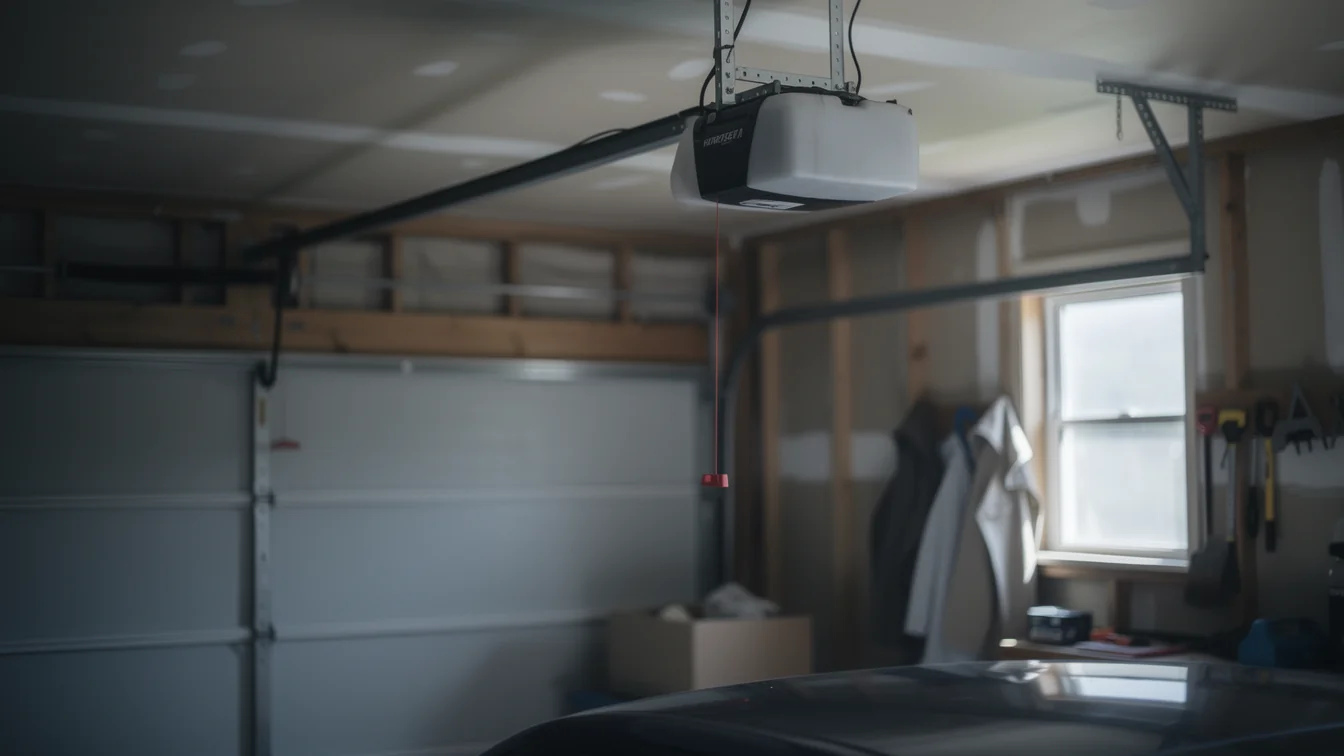
Wind and the Wide Door: A Plymouth Problem
Plymouth homes built 1957-2007 often carry 16-foot double doors never braced for open, cold-climate wind.
Read guide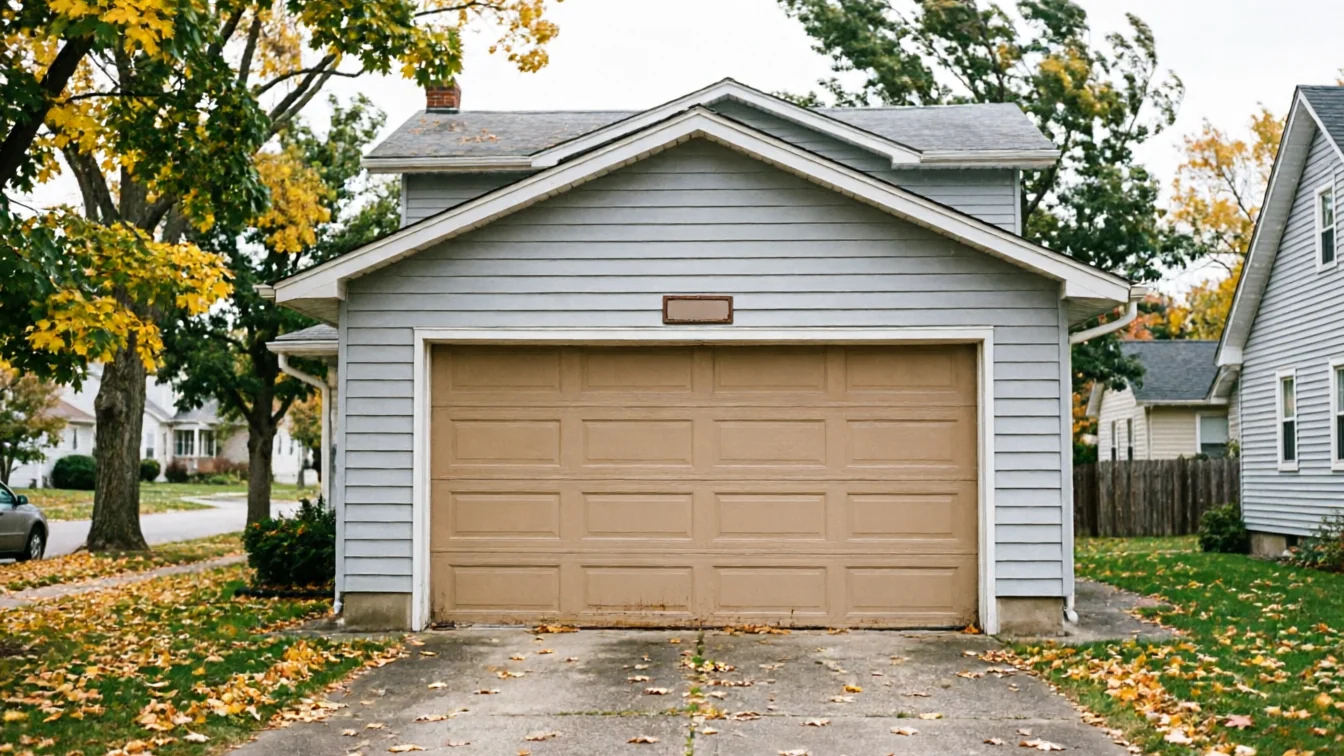
What Replacing a Garage Door Actually Looks Like in Plymouth
Plymouth homes mostly date 1957-2007, and winters here run cold and severe.
Read guide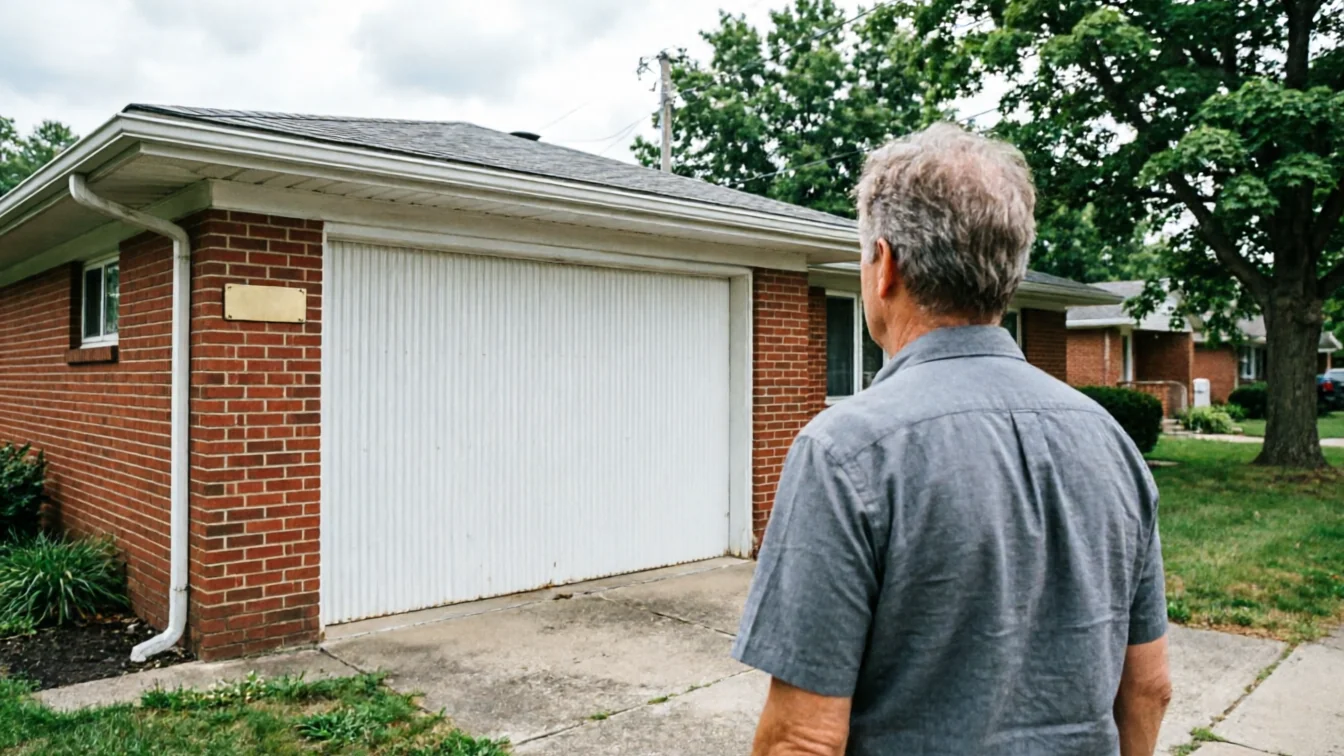
When Your Plymouth Garage Door Predates the Insulation Code
Plymouth homes built 1957-2007 often carry garage doors from before insulation codes tightened, which matters for cold-weather repair and replacement.
Read guideReady when you are
Need a garage door sorted in Plymouth?
Plymouth Garage Door Pros repairs and installs garage doors, springs and openers in Plymouth, MN and the surrounding area.