Two things push roller failure in this area faster than in a milder climate: the age of the housing stock and the winters.
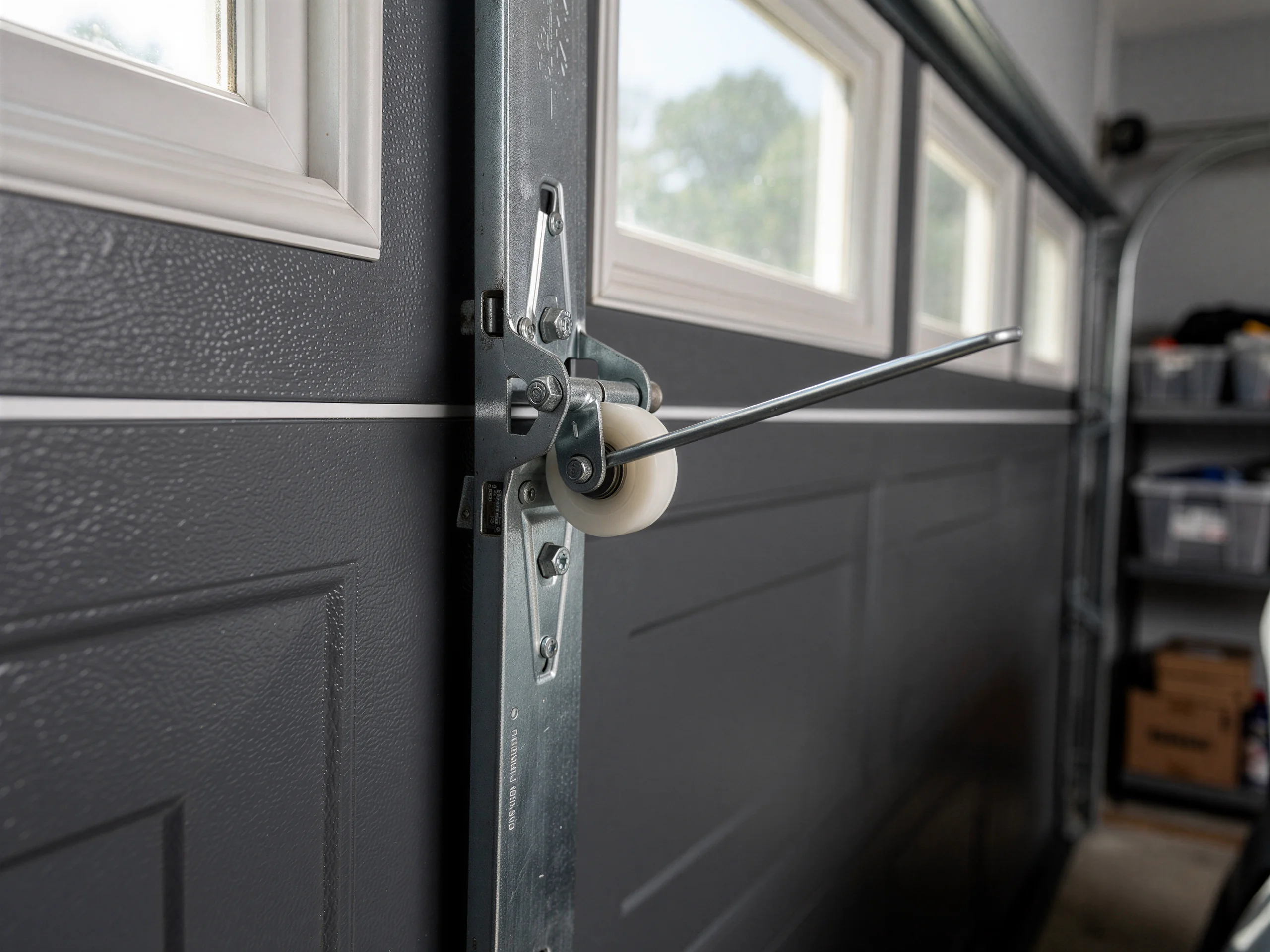
With most doors dating to builds between 1957 and 2007 - a lot of it clustered in the 1980s and 90s across the towns in this service area - a large share of rollers out there are original or a cheap like-for-like replacement from years back. Steel rollers that age have had decades of thermal cycling to develop flat spots, and nobody re-greases a track as part of routine upkeep, so the wear compounds.
The cold is the other half of it. This area sits in a severe cold climate band, and steel rollers contract in the cold just like the rest of the hardware - clearances tighten, grease stiffens, and a roller that was marginal in August will bind and chatter in January. Nylon rollers handle cold better in general, but if they were already hairline-cracked from age, a hard freeze is what finishes them off. That's why roller calls spike in winter: it's not that the cold damages good rollers, it's that it exposes rollers that were already near the end.